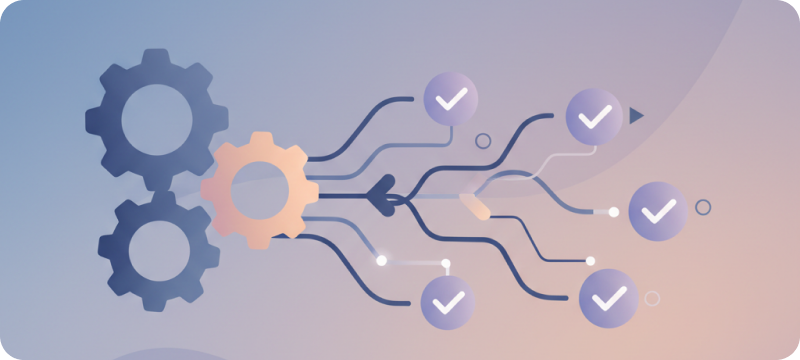

What a sales agent actually is
The word "agent" has been stretched so far it barely means anything anymore. In a sales context, a narrow definition helps: an agent is a system with a goal, access to sources of information, and permission to take steps on its own until it produces something you can review. It doesn't answer one-off questions; it delivers finished work.
The difference from a writing assistant is the assignment. You ask an assistant for an email. You ask an agent to find out what's going on across twenty accounts, decide which ones deserve attention this week, and write down why. You review the result, correct it, and approve it, but you don't start from scratch.
“The question is no longer whether AI can write an email. It's whether it knows why that email is worth writing.”
From answering questions to proposing next steps
The useful leap happens when the system stops waiting for instructions and starts bringing proposals. In practice, you notice it in four very specific parts of a B2B team's day.
- Account research: who's in charge, what they've announced, what they've hired for, and what they use today
- Prioritization: which accounts moved this week and which can wait
- Drafting: a first draft that already cites the real reason for reaching out
- Follow-up: remembering the open thread and proposing when and how to come back
Where it fits in a team that already works
An agent doesn't replace sales judgment: it feeds it. The rep still decides who to call, what to promise, and how to negotiate. What changes is the starting point for that decision, which goes from a list sorted by creation date to a handful of accounts with a reason attached.
That's why the rollouts that work start with the prep work, not the message. Automating research is reversible and low-risk; automating direct outreach without judgment is the fastest way to burn a database that took years to build.
What it won't do for you
It won't fix a value proposition nobody understands, and it won't turn someone who doesn't have the problem into a customer. It also won't know what isn't written down anywhere: the hallway conversation, last week's call, and the veteran rep's gut feeling are still the best sources there are.
And it needs maintenance. An agent nobody corrects drifts out of alignment within two months, the same way a report nobody reads stops being reliable. Periodic review isn't bureaucracy: it's what keeps the system useful.
Conclusion
Agents are changing B2B sales from the bottom up, not the top down: they don't reinvent the customer relationship, they remove the hours spent getting to it. Start with the work nobody claims as their own—the research, the order of the list, the follow-up that slips—and measure whether the team shows up better prepared for the conversation. That's where you'll see it.