
Why a generic message gets ignored
Someone who gets ten similar pitches a week doesn't read them: they sort them. And the sorting happens in the first line, where they decide whether this is about their problem or about your product.
A generic message doesn't fail for being bland. It fails because it forces the reader to do the work of translating your offer into their situation, and they have no reason to.
“Personalizing isn't talking about them. It's talking about what's happening to them.”
The three kinds of context that matter
Not all context is worth the same. There are three kinds that genuinely change the conversation, and none of them requires two hours of research.
- The company: what has changed in their business over the last few months
- The person: what they're responsible for and what they'll be measured on
- The moment: why this is relevant this week and not next
Personalization that scales
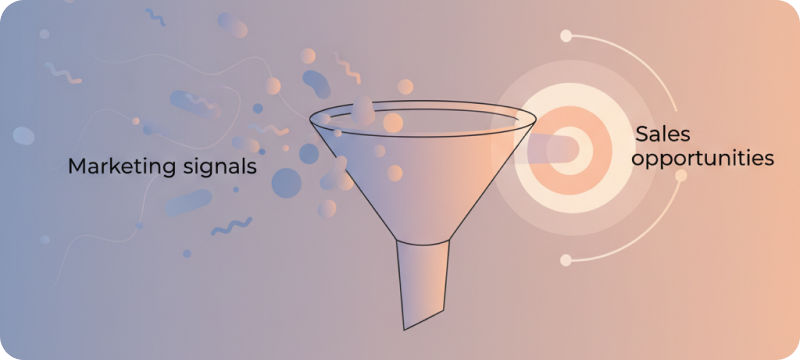
The usual objection is time: researching like this doesn't fit into a day with forty accounts. That's true if the research is done by hand. It stops being true when the context arrives already gathered and the rep only decides which part to use.
The limit isn't scale, it's judgment: the system can bring ten facts, but choosing the one that opens the conversation is still a human job.
Where the line is
There's a point where context stops being relevant and starts being uncomfortable. The practical rule: if a colleague wouldn't say it in a meeting, don't write it in a first email. Relevance is appreciated; surveillance isn't.
Conclusion
Context is what separates a message that gets filed from one that gets a reply. Two well-chosen lines are enough, and the only way to sustain them account by account is for someone—or something—to have done the work of gathering them first.